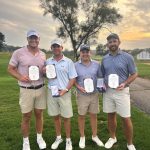
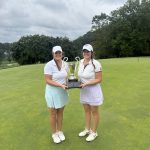
Lutherville, Md. – Willow Springs Golf Course in West Friendship, Md., has been host to a transformative initiative, creating opportunities, inspiration, and connections for athletes and coaches involved in the Special Olympics Maryland community. The program, a first of its kind for the Special Olympics Maryland golf program, brings professional-level training to participants who typically only experience golf within their county or Special Olympics team.
Special Olympics Maryland introduced an eight-week golf skills training program in partnership with Willow Springs Golf Course, and supported by the Maryland State Golf Association (MSGA), that was designed for both athletes and coaches. The program ran every Saturday morning from August 2 to September 20, with alternative Friday evening sessions available. Each weekly session lasts one hour and takes place outdoors on the course.
MSGA Board members played a key role in the development of the eight-week program. Mani Madala, Sports Director with Special Olympics Maryland, said the idea stemmed from MSGA Board member Michael Cumberpatch, who initiated a meeting with the MSGA. “It was more like all the people coming together for a good cause,” Madala described. “We never had an outside training practice like this for golf…this is a one-of-a-kind, first-time practice opportunity.”
In addition to the MSGA’s support, the golf skills training session was made possible by grant funding. “This program was possible through grant funding from Special Olympics International and the Jordan Spieth Family Foundation,” Madala said. “Special Olympics Maryland was awarded this grant for the 2025 golf season as the Special Olympics International and the Jordan Spieth Family Foundation felt this was a good opportunity for the athletes, so that is how the opportunity came to life.”
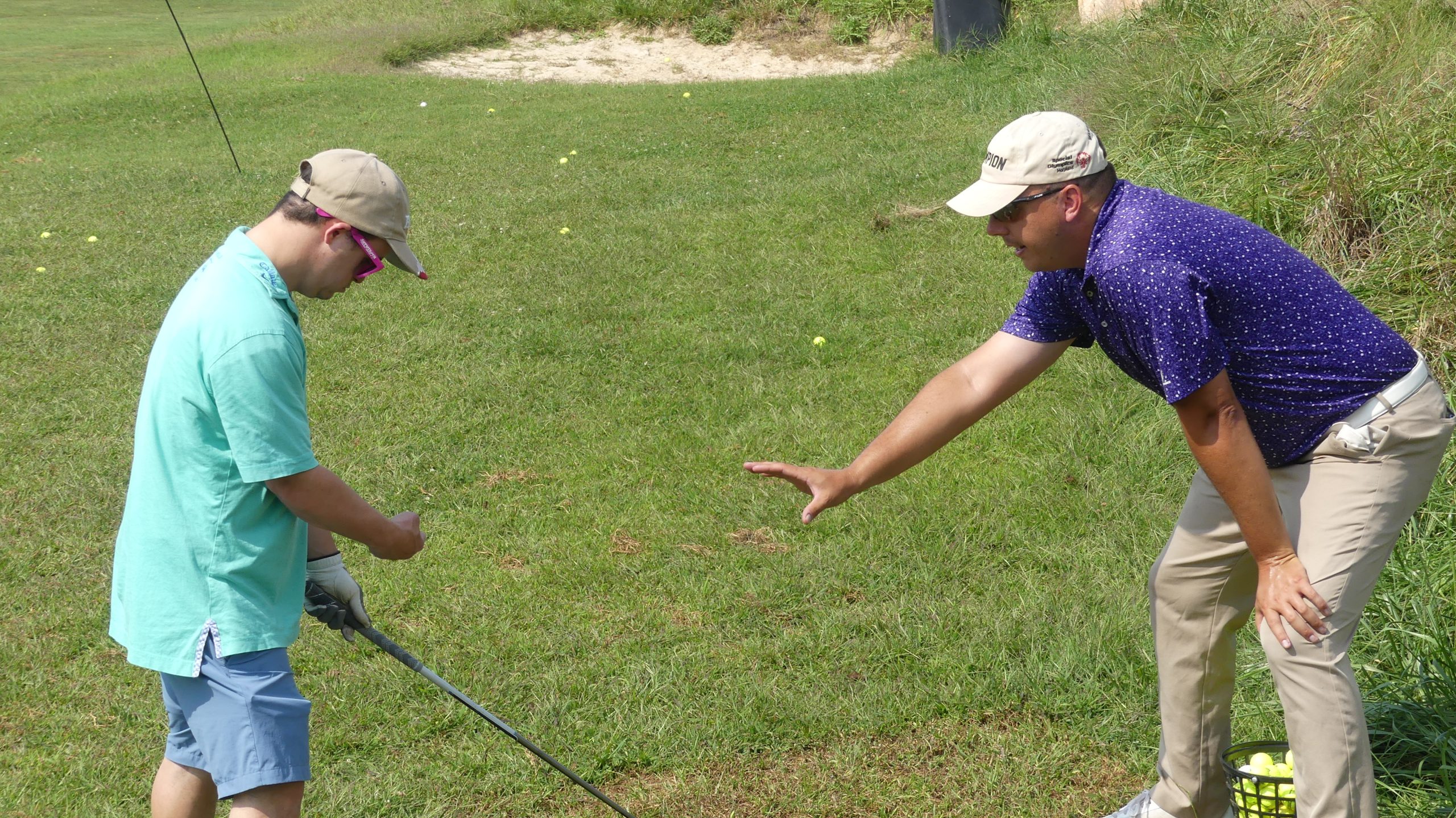
Eric Slosek (right) works with Brian Bourdon (left) during the driving range portion of the golf skills training session at Willow Springs Golf Course.
Eric Slosek, the head golf professional at Willow Springs Golf Course, was quickly approached to host the program. Slosek is a certified adaptive physical education teacher, which made him a perfect candidate to operate the program. Parker Tieperman, a golf performance professional and swing speed coach, just so happened to be the swing speed coach for another MSGA Board member, Armando DelToro, who had asked him if he knew anyone who could help train Special Olympics athletes. Tieperman discussed the idea with Slosek, and ultimately, the two agreed to take on the program at Willow Springs Golf Course.
The curriculum is not static, but structured to develop fundamental golf skills in a progressive way: weeks 1-2 focus on putting; weeks 3-4 on pitching and chipping; weeks 5-6 on low and mid irons; and weeks 7-9 on hybrids and long irons. Coaches and participants were given access to the lesson plans in advance via the Operation 36 golf app for the eight weeks.
“We decided to kind of model it off of the operation 36 style where we teach from the green back to the tee box,” Slosek said. He also emphasizes that flexibility and adaptation have been key. “As any teacher knows, you can have a plan, and the athletes come in and go…we were able to modify and accommodate for the different levels of ability.”
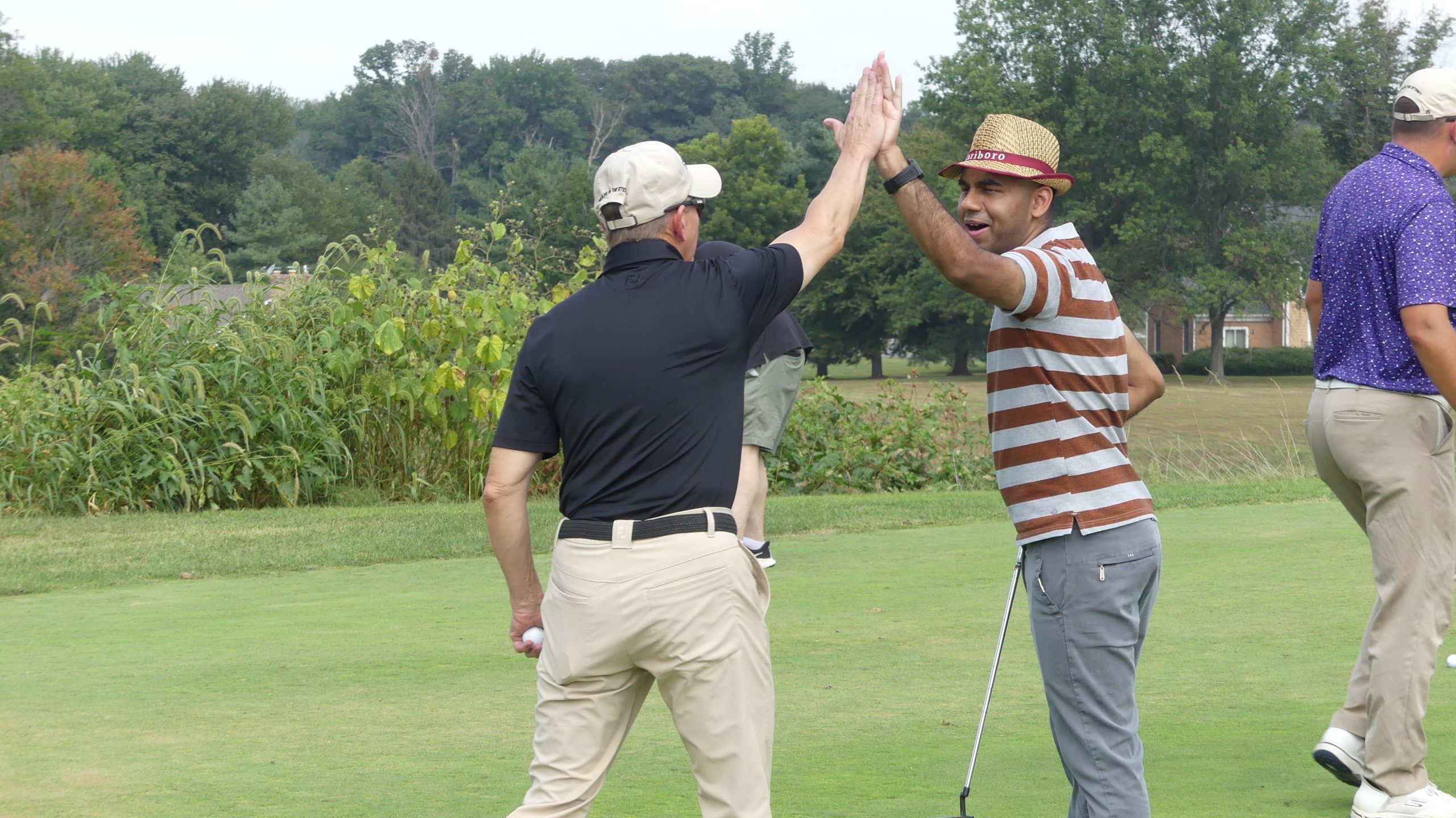
Parker Tieperman (left) high-fives Sharv Wagle (left) during the putting portion of the golf skills training at Willow Spring Golf Course.
The progress that has been made over the eight-week golf program has not gone unnoticed. Tieperman shared, “We’ve seen the rewards already, especially in the athletes. Just in them making contact with the ball, and they come out, they’re stronger, they’re more flexible. It’s just been so gratifying to see each one of them improve tremendously from the first session.”
The rewards of the training sessions are not only felt by the athletes involved, but by the coaches and unified partners as well. “A lot of the coaches and the unified partners are enjoying it even more than the athletes are because they’re getting their games figured out…they’re able to take a lot from the practice session and practice on their own and become independent.”
Success for this training program goes beyond scores and awards. “For them to come down here on Saturday and spend another additional hour learning golf…it’s kind of cool,” Madala said. Looking ahead, the team has aspirations of expanding this model to new counties in Maryland and bringing adaptive, inclusive golf to athletes everywhere in Maryland.
Slosek describes the long-term goals of the program: “To be able to build an infrastructure across the state, whether it’s with other golf professionals in Southern Maryland, Western Maryland, Eastern, Central, wherever…giving the same access that these folks have that are close by.” Slosek added, “Something that allows everyone to feel like they have access to the training and the expertise of the two of us, Parker and I, in our different fields.”
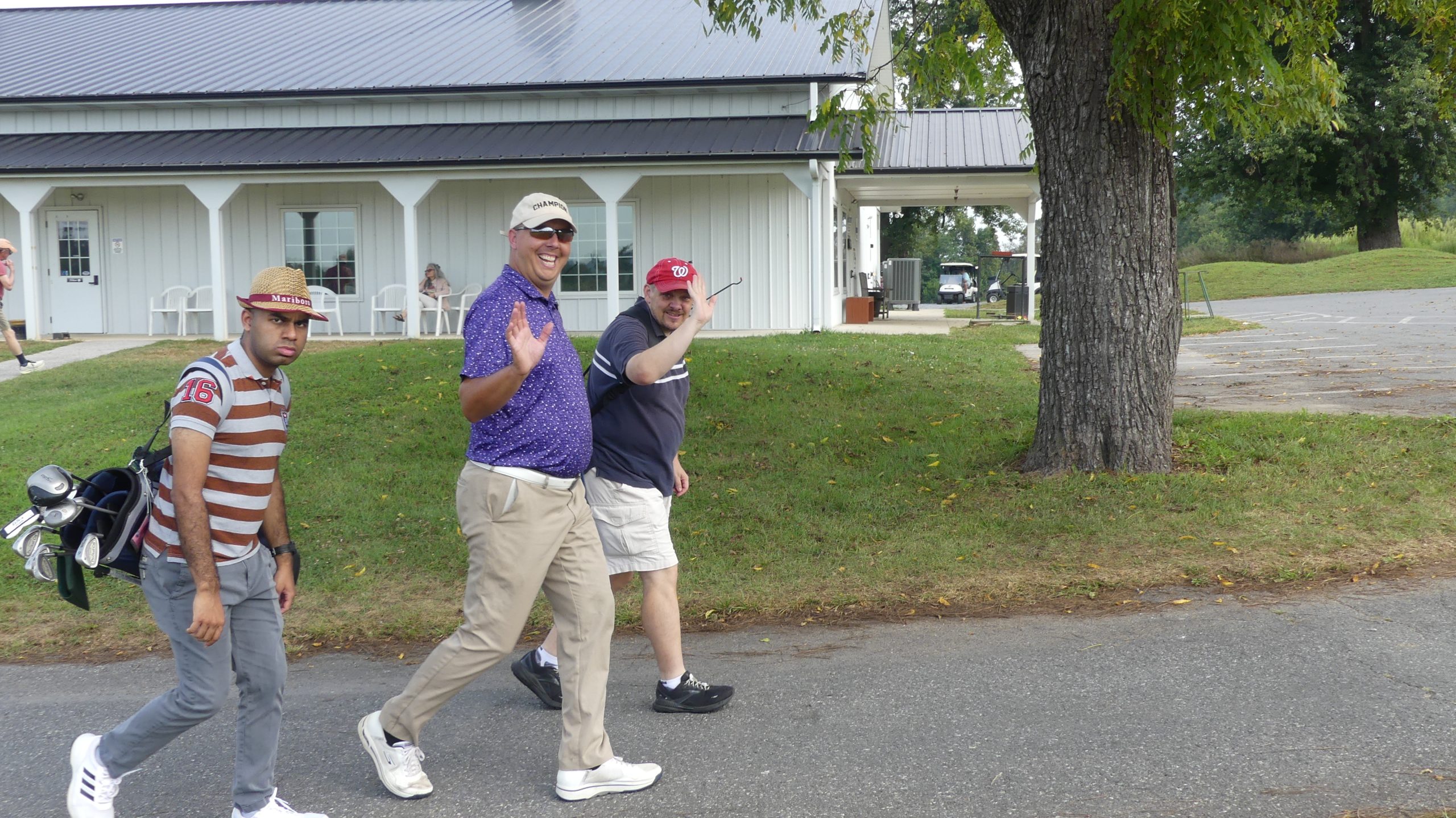
Eric Slosek (middle) walks with Sharv Wagle (left) and Al Richardson (right) to the next station during a golf skills training session at Willow Springs Golf Course.
Beyond the game, it’s about relationships and memories. “The biggest thing is just the response and the warmth of not only the athletes, but the coaches and parents,” Slosek reflected, remembering the excitement on “J.J. and John [Bogasky’s] faces when they came in with their silver medal. They were ecstatic.”
“It’s been absolutely rewarding,” Tieperman said. “I’ve learned so much from Eric and from the athletes and from other peers in my industry. The best thing is seeing their smiles on their face at the end and watching them improve…minute by minute while we’re teaching them.”
To learn more about the Special Olympics Maryland organization or to find ways to get involved, we encourage you to visit the Special Olympics Maryland website.
MSGA Mission
To serve, grow, and advance the game of golf in Maryland and the District of Columbia.