
Lutherville, Md. – Jan Miller’s tenure on the Maryland State Golf Association Board of Directors will conclude at the end of 2026, marking the close of 18 years of service to the association. Since joining the Board in 2008, Miller has served as MSGA president, dedicated countless hours to rules officiating, and helped shape the association’s governance. Through his work, he has supported golfers across Maryland and Washington, D.C., and helped to ensure fair competition at MSGA events.
Miller’s path into the golf industry began while serving in the U.S. Air Force. During his downtime, he picked up the game and developed an interest that would eventually lead him to pursue a career as a golf professional. After completing four years of service, including a final duty station in Hawaii, Miller left the Air Force in 1975 and enrolled at the San Diego Golf Academy in 1976.
It was a two-year program that introduced Miller to the business side of the golf world and provided him a foundation for his professional career. After graduating, an opportunity arose back in Baltimore, and he began his golf professional career at Pine Ridge Golf Course after his father connected him with Johnny Bass, the golf professional there at the time.
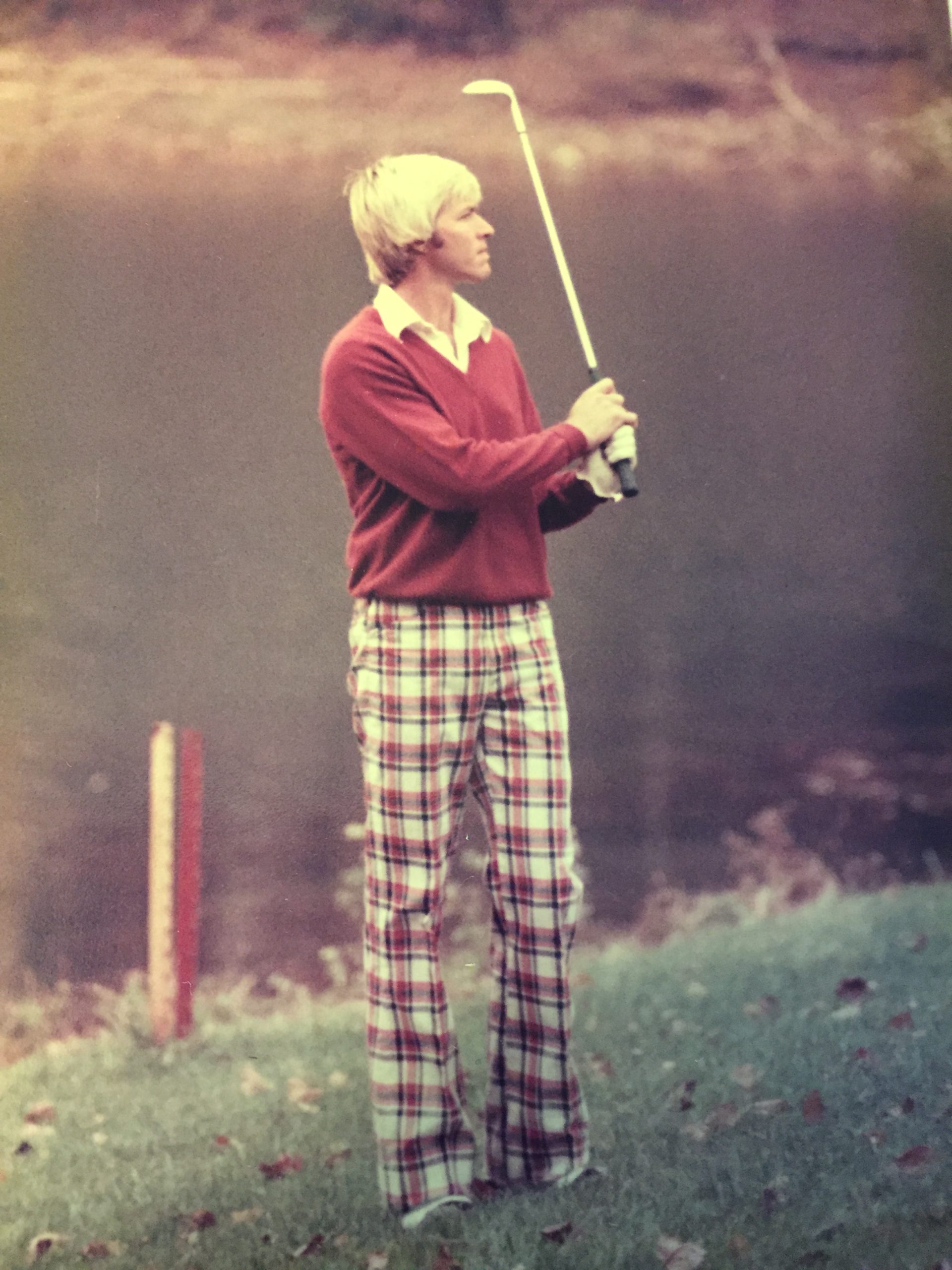
Jan Miller from during his time as PGA Golf Professional (Photo provided by Jan Miller)
After a year at Pine Ridge, Miller became the club’s teaching professional, spending approximately three years there before moving on to Chevy Chase Club. There, he worked under head professional Ward Burgess, whose approach to developing his assistants left a lasting impression.
“Ward insisted that we practice and play some with the members, and encouraged us to play in events,” Miller said. “ There were lots of events…and I played in as many as I could.”
The opportunity to practice and compete alongside members helped Miller continue developing his game while working in the golf industry.
While at Chevy Chase Club, Miller continued to teach the game and help members improve. One of his students was Sandra Day O’Connor, who was the first woman to serve on the U.S. Supreme Court. Miller remembered her as a student who wanted to understand every detail of the golf swing.
O’Connor would carefully follow his instructions, checking each step along the way to make sure she was doing it correctly. The experience reflected Miller’s enjoyment of teaching and helping others develop their games.
However, it wasn’t long before Miller began considering what the future might look like outside of golf. As he thought about getting married and building a career that could support a family, he began exploring an opportunity in the insurance industry.
Ralph Bogart, a Chevy Chase Club member and Maryland Golf Hall of Famer, co-owned an insurance agency and had previously encouraged Miller to consider joining the business. Miller reached out to Bogart to see whether the opportunity was still available. It was, and he made the transition from golf to insurance, beginning a new career that would last decades. He never looked back.
Although Miller had stepped away from working in golf, the game remained a constant in his life. He continued playing and eventually found another way to contribute to the sport through volunteer service with the Maryland State Golf Association
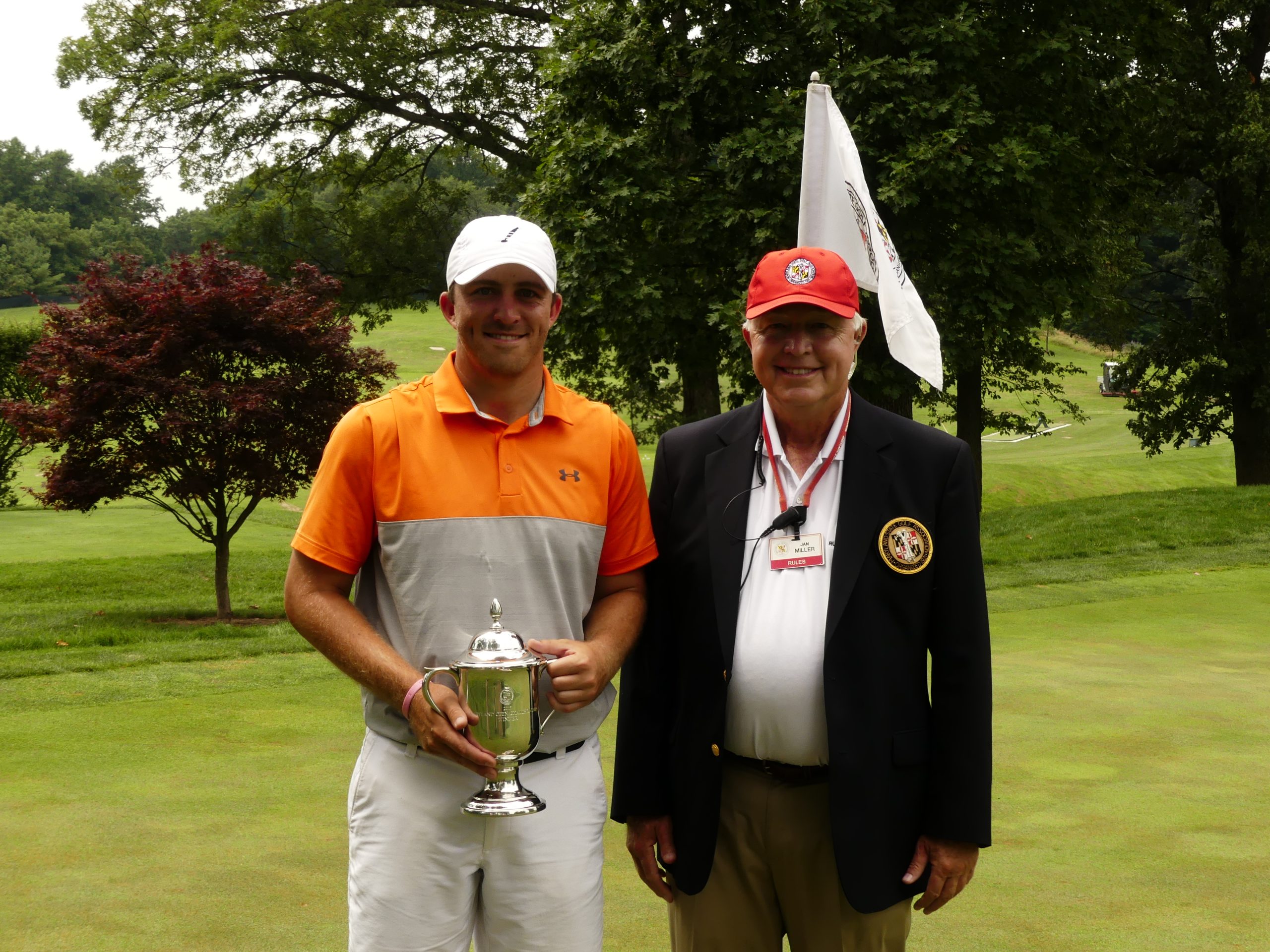
Jan Miller poses for a photo with his son, Brad Miller, after he won the 2017 Maryland Open
Miller’s path toward becoming a golf volunteer began well before he joined the MSGA. During his years as a golf professional, members would regularly approach him with questions about the Rules of Golf. Not always knowing the answers, he became curious about the rules and how to apply them correctly.
“I got interested in the rules because members would come and ask me questions about them,” Miller said. “It made no sense to tell them, ‘I don’t know what you’re talking about,’ so that is where I got interested.”
That curiosity stayed with him, even after moving into the insurance industry. When Miller began volunteering with the MSGA in 2008, he saw it as an opportunity to give back to a game that gave him so much. After years of enjoying the game and competing in tournaments, he wanted to ensure others, especially younger players, had those same opportunities.
“I loved playing golf. I loved competing in golf,” Miller said. “I’d say, ‘OK, now it’s my turn to be the guy that runs all the tournaments so that everybody that wants to play can, especially the young people.”
His initial motivation to help run tournaments would grow into a broader commitment to the association and its players. As he gained experience, Miller also learned that being an effective rules official required more than knowing the rule book. He learned how to approach players and explain the rules more effectively, helping them navigate difficult situations on the golf course.
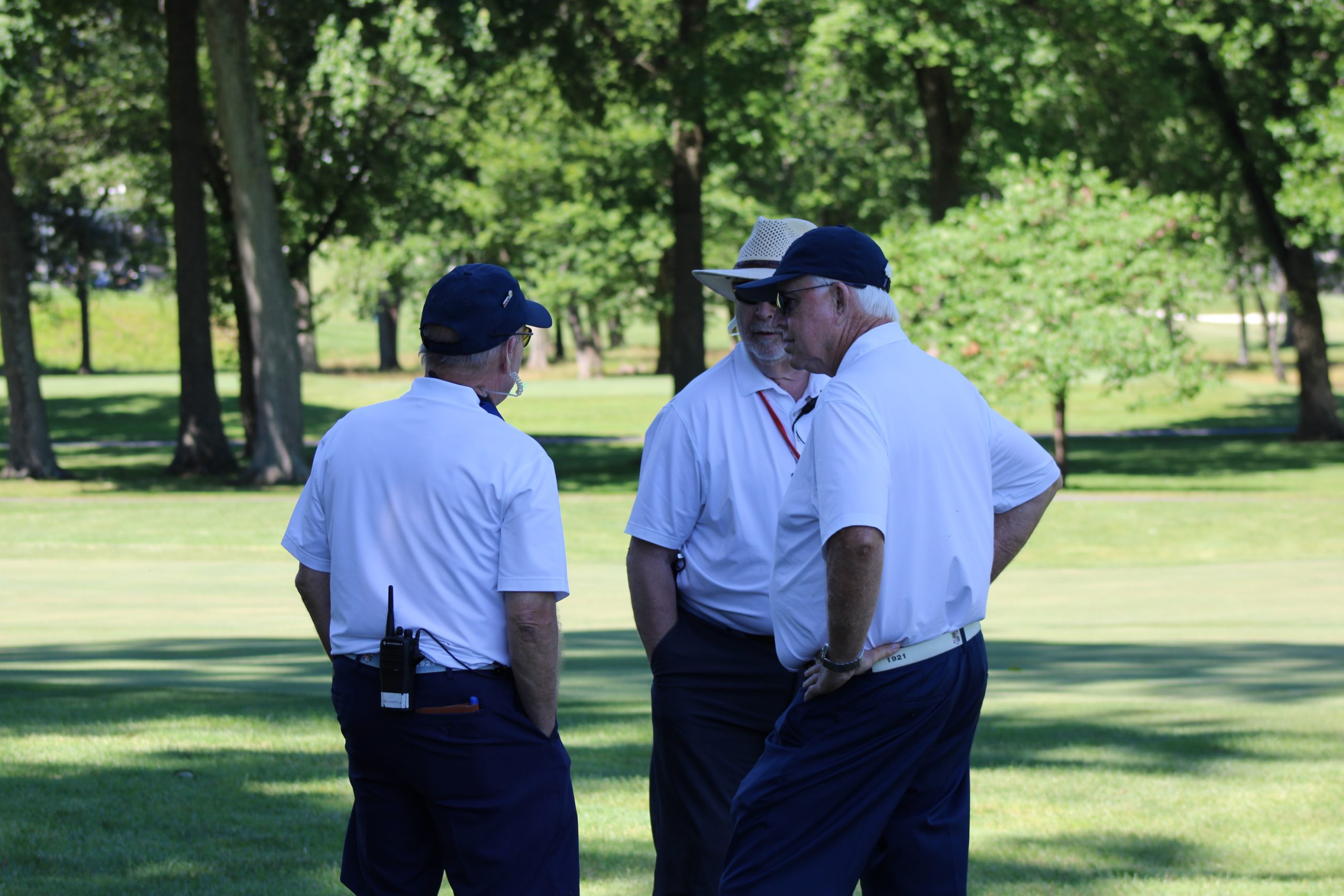
(L-R): Cliff Patterson, Jack Barse, and Jan Miller
Miller’s early experiences as an MSGA volunteer gave him firsthand insight into the responsibilities of a rules official. One of his first assignments at a tournament was as a starter during the Maryland Four-Ball at Maryland Golf and Country Clubs.
His attention to the rules even earned him some good-natured teasing from friends. When he put on the MSGA’s blue blazer, they joked that he had become a “dictator.” Miller’s response was straightforward, “The rules apply to everyone, and every player is expected to follow them.”
Over time, he learned that officiating required more than just knowing the rules front to back. Emotions can run high on the golf course, especially after an errant shot or if a player finds themselves in an unfamiliar situation. Miller came to understand the importance of approaching those moments calmly. It was about listening to the player and explaining what options were available.
Miller’s philosophy is shaped by the belief that officials should help players navigate the rules rather than focus only on penalties. He has been encouraged to see that mindset taken by more volunteers. Additionally, he noted that volunteers don’t need to be experts to get started, thanks to the support of more experienced officials.
“You don’t have to be an expert. You’re going to have a radio, and if anything comes up, there’s always going to be several of us out there that know how to handle the situation,” Miller said.
His approach is especially valuable in junior golf, where a ruling can become a learning opportunity for a newer, inexperienced golfer. While officiating a Middle Atlantic Junior Tour event, Miller came across a young player kneeling in the weeds of a red penalty area, attempting to measure two club-lengths from his ball. Miller knew he was needed.
After walking the player through his proper relief procedure, letting the player know he was to take two club-lengths from the spot where his ball last crossed the penalty area, Miller recalls that the young golfer looked up and asked him, “Are you sure?”
Miller chuckled, remembering his response to the young player. “I remember asking him, ‘What if you’d been in the lake over there?’ How are you going to get two club-lengths from the middle of that lake?’”
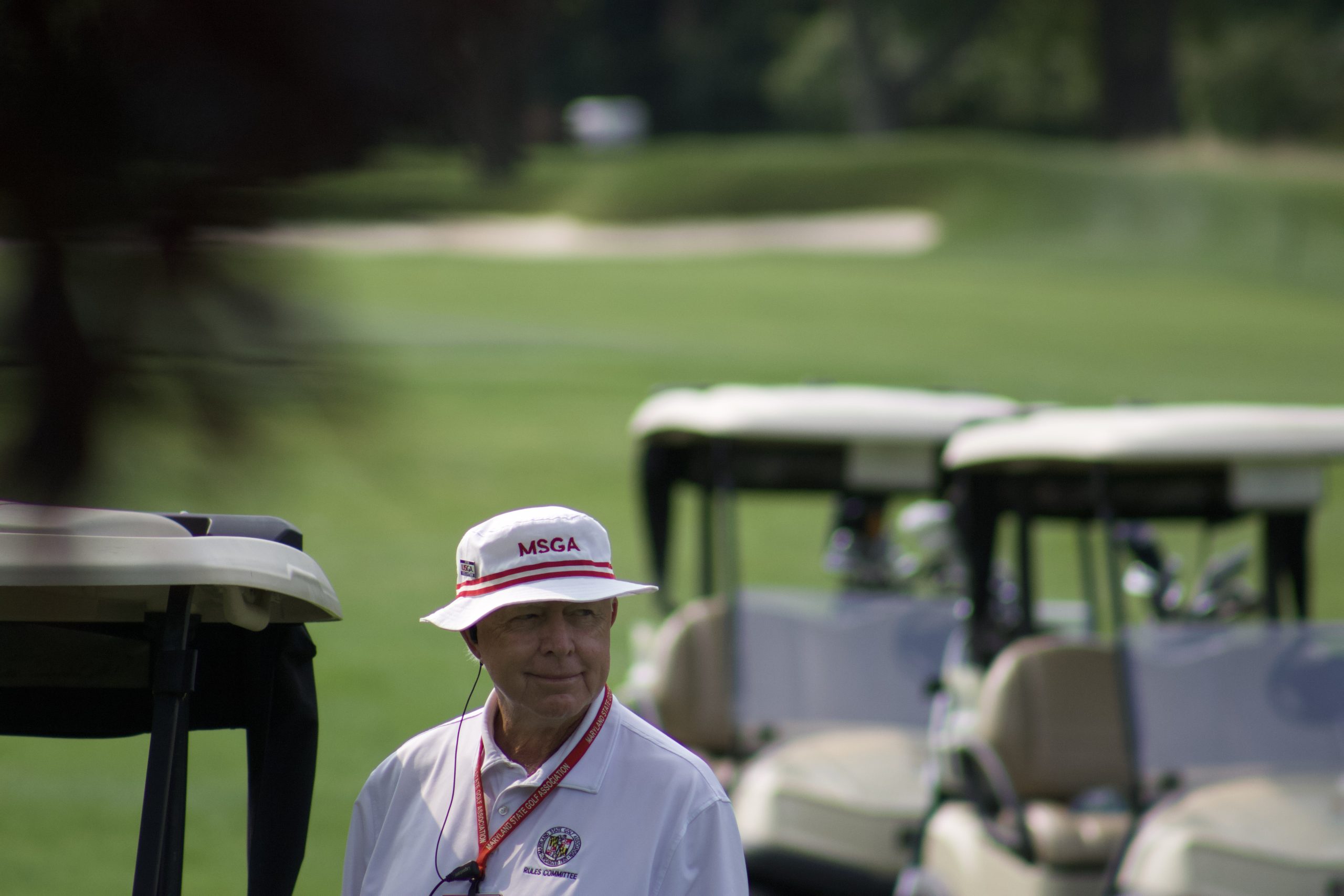
Miller’s contributions to the MSGA extend beyond his work as a rules official. He has served on the Board of Directors since 2008 and also served as the association’s President in 2018. During his time on the Board, he helped shape the organization’s structure and recognition of individuals who have made a lasting impact on Maryland golf.
One of those contributions was helping establish the Dawson Stump Award. Miller initially proposed an award to recognize Maryland golfers who had achieved success beyond the state, but weren’t being considered for the association’s Player of the Year. Bill Smith, then MSGA’s executive director, supported the idea and suggested expanding the award to include individuals who had made outstanding contributions to the game.
Miller agreed with the broader vision and believed naming the award after Stump was fitting. He remembered Stump as someone who understood the Rules of Golf and looked for ways to help players navigate difficult situations. “I thought it was very appropriate to name it after him,” Miller said. The award would recognize not only competitive success, but also the people who had made meaningful contributions to golf in other ways.
Miller’s contributions to the MSGA also included helping rewrite the association’s bylaws. After researching the governing documents of other state golf associations, he helped develop revisions that updated the association’s structure and expanded voting rights within its membership.
The process involved numerous drafts and extended beyond Miller’s presidency. At the request of his successor, he remained involved to help bring the revisions to completion, ensuring the work would benefit the association beyond his own time in leadership.
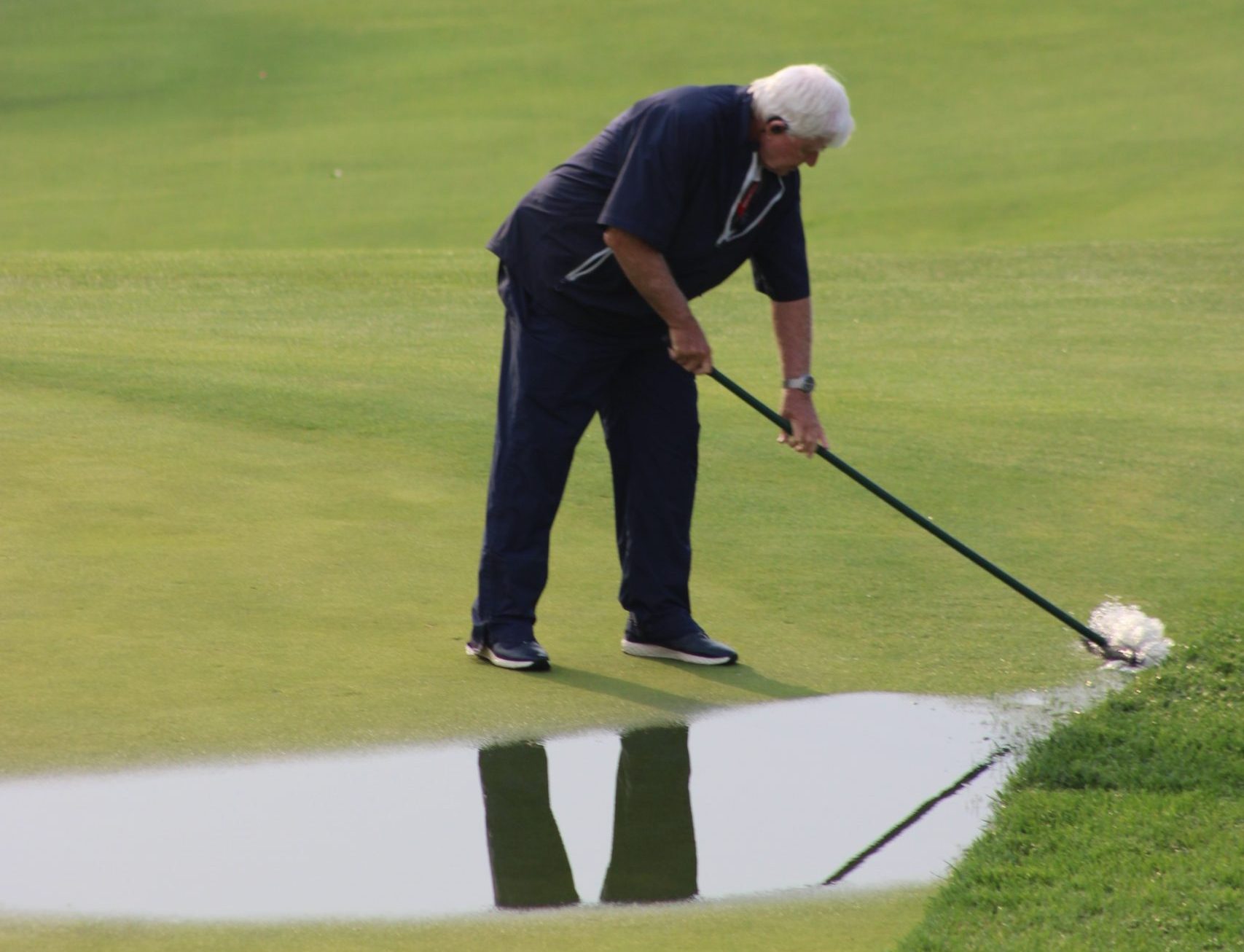
Volunteering with the MSGA has been rewarding for several reasons for Miller. It has given him the opportunity to build relationships with players and continue learning the Rules of Golf.
Miller’s time as a volunteer has also allowed him to share his knowledge of the game with players of all ages. Whether it is helping a competitor navigate a difficult rules situation or contributing to the association’s long-term development, he has approached his responsibilities with the mindset to support others and preserve the integrity of the game.
Although his board service will conclude at the end of the year, the impact of those contributions will remain part of the association’s story. Miller’s years of volunteering demonstrate how sharing knowledge and helping others can make a lasting difference in Maryland golf.
—
As a nonprofit organization, the MSGA relies heavily on volunteer support and continues to grow through the generosity of these individuals. Volunteers assist the staff in providing the highest level of service to golfers and golf clubs in Maryland. Interested in getting involved with the MSGA? Please visit our Volunteer webpage to learn more.
MSGA Mission
To serve, grow, and advance the game of golf in Maryland and the District of Columbia